
County Renovations Hip To Gable Loft Conversion
Transform your home with a hip to gable loft conversion
Transform your home with a hip to gable loft conversion
County Renovations Ltd is your trusted partner for hip to gable loft conversions across the UK. A hip to gable conversion adapts the sloping side of a roof, known as the “hip,” into a vertical gable wall, extending the existing ridge to create more useable space.
By straightening the slope, this type of conversion opens up the loft, providing headroom for a new stairwell and live-able rooms. It’s ideal for semi-detached houses, end-of-terraces, bungalows and detached homes with hipped roofs. Mid-terraced properties, which lack a side roof slope, aren’t suitable.
What does hip to gable mean?
A hip to gable conversion involves structural alterations to the roof. We build up the side slope vertically and extend the roof ridge to meet the new gable wall. Inside, we reinforce the floor, install new joists and design a staircase. Outside, the new gable is finished to complement the existing house. Options include tile-hung, slate-hung, rendered or cladded walls. Fascias, soffits, gutters and windows are also matched so the extension looks like it has always been there.
Hip to gable conversions are often combined with rear dormer extensions to maximise floor space. By replacing a sloping roof with a vertical wall, they create substantial headroom, making room for bathrooms or bedrooms, and allow natural light from larger windows. They can also improve ventilation and add up to 15 – 20% to your property value.
Benefits of a hip to gable conversion
- Greater headroom and floor area. The new vertical wall increases the volume of usable space, turning a cramped attic into a spacious bedroom, home office or master suite.
- Flexible design. The straightened roofline provides flexibility to add dormer windows or roof lights, tailor layouts and incorporate en-suite bathrooms. This makes it easier to design a comfortable staircase and arrange furniture.
- Natural light and ventilation. Large windows installed in the new gable or rear dormer flood the loft with daylight and provide cross-ventilation.
- Aesthetic integration. Matching roof tiles, slates, render and brickwork ensures the extension blends with the existing home. This gives a cohesive appearance that enhances kerb appeal.
- Increased property value. A hip to gable conversion can add 15 – 20% to your home’s value, providing a strong return on investment.
- Permitted development potential. Many projects fall under permitted development rights, which means you can build without full planning permission. However, a lawful development certificate is still recommended to prove compliance.
County Renovations Ltd. will survey your property, confirm whether your project qualifies for permitted development and, if necessary, handle planning permission applications on your behalf.
Is my property suitable?
Hip to gable conversions suit homes with hipped roofs where headroom is limited. They’re commonly used on semi-detached and detached houses, including 1930s semis and bungalows. Mid-terrace properties lack the necessary side slope and can’t accommodate this type of conversion. During our free survey, County Renovations Ltd measures headroom and roof pitch to confirm suitability.
We recommend a minimum loft height of 2.2 metres at the highest point to make the new space comfortable and to comply with building regulations. If your roof is too low, we may suggest a dormer or mansard conversion.
Hip to gable Loft Conversion Extension FAQs
Can a hip to gable conversion be combined with other loft types?
Yes. Many homeowners combine a hip to gable conversion with a rear dormer to maximise space. This combination creates a full-width extension along the back of the house and significantly increases floor area. See our Dormer and L-Shaped Loft Conversion pages for more options.
Do I need planning permission?
Most hip to gable conversions fall under permitted development rights, provided they meet volume and design rules. However, properties in conservation areas or listed buildings may require full planning permission. We advise applying for a lawful development certificate for peace of mind.
How much headroom is required?
We recommend at least 2.2 metres of vertical height at the highest point in the existing loft. This ensures comfortable headroom after the new floor structure and insulation are added. If your loft is lower, alternative conversions may be more suitable.
Can I live in the house during construction?
Yes. Although hip to gable conversions involve structural work, we isolate the building area to minimise disruption. Our team will discuss logistics with you before work begins.
Ready to Get Started?
To explore how a hip to gable loft conversion could improve your property, contact County Renovations Ltd for a no-obligation consultation. We also offer expert guidance on Velux Loft Conversions and other loft types, ensuring you find the right solution for your home.
Ready To Transform Your Home Today?
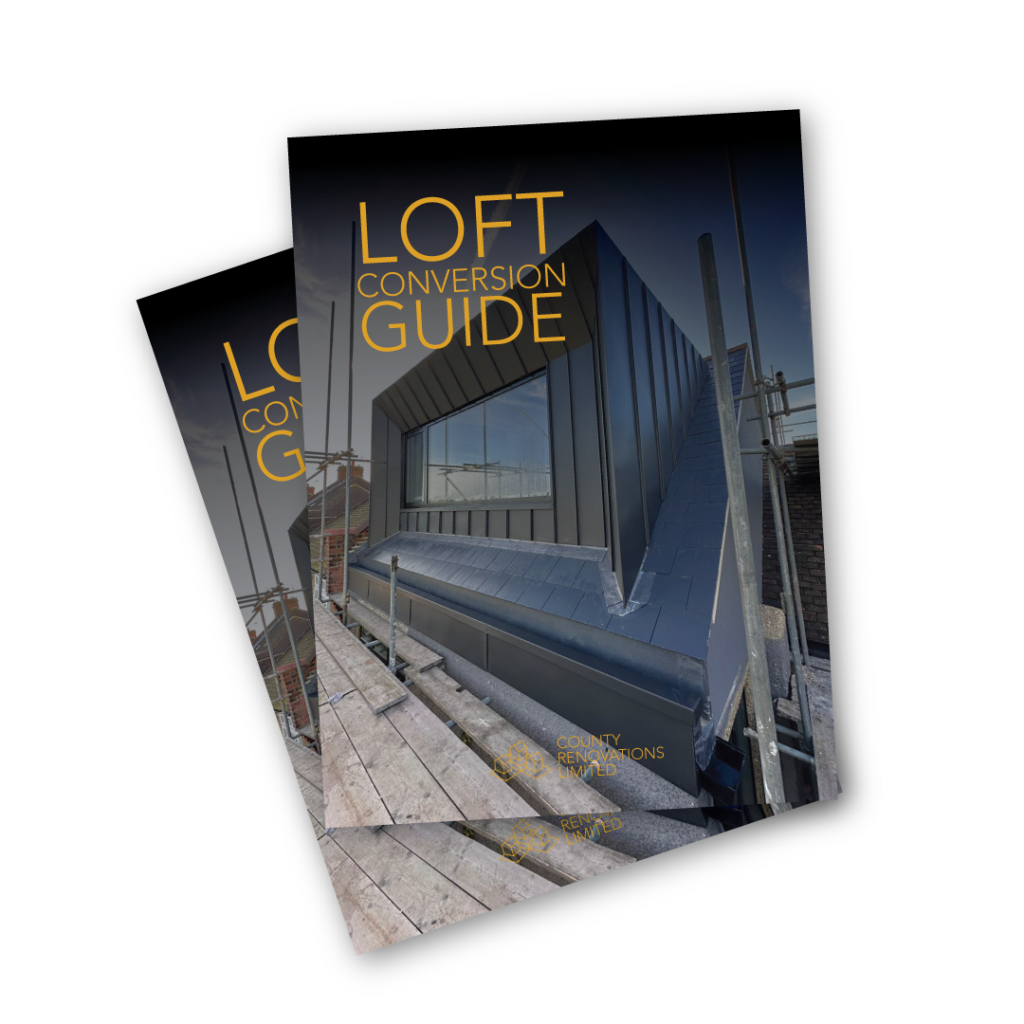
Download Our FREE
Expert Guide
Thinking of planning a loft conversion? Our comprehensive guide covers everything form planning permission to choosing the right type of conversion for you home.
1. Types of lofts explained
2. Planning & Building Regulations
3. Costings & Timelines
4. Design Inspiration Gallery
"County Renovations transformed our dated bungalow into a stunning contemporary home. Their attention to detail is second to none. "James & Matha Henderson